
A Mom’s Best Or Worst Day


The following blog first appeared on The Huffington Post.

_______________________

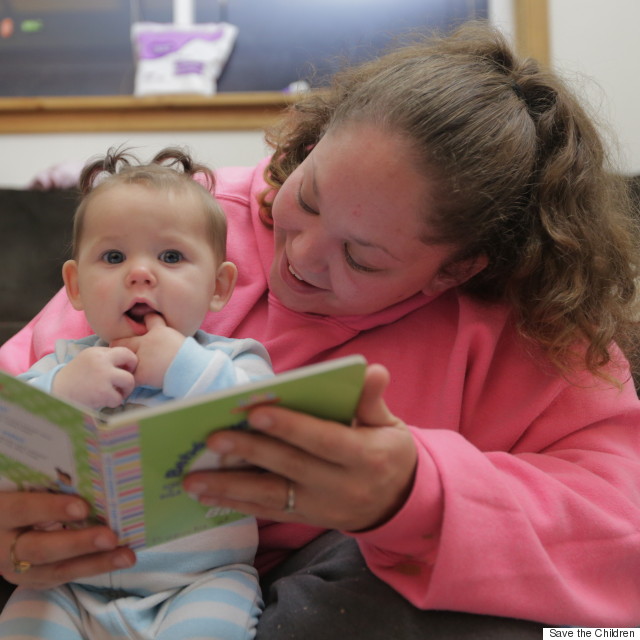
Every day, thousands of women celebrate one of life’s most amazing experiences — becoming a mother. But every 30 seconds a mother’s first moments with her baby are cut short, on the very day she gives birth.


Until now, we didn’t know how common this heartbreaking experience is in the United States and around the world. But Save the Children’s new report shows that one million babies die the day they are born.


State of the World’s Mothers 2013: Surviving the First Day also shows that today we have the evidence and cost-effective tools to save up to three quarters of newborn babies, without intensive care.

continue reading »

Posted in Health | Tagged , , , , , , , , | Leave a comment


In This Case, Second Place Isn’t Something To Celebrate


Early this month I took my first trip to Abuja, Nigeria.  Despite visiting almost 60 countries with Save the Children, I had never been to the West African nation.  It is a country of over 162 million, one of the most populous in the region and seventh most populous in the world. With an average family size of almost 7, it has the highest population growth in Africa-today, one out of every four inhabitants of the African continent is a Nigerian.  While Nigeria may top the charts in these ways, it also unfortunately has the second-highest number of under-5 deaths.  I wanted to understand about why so many children, and especially newborns, are dying in Nigeria.

  continue reading »

Posted in Foreign Travel | Tagged , , , , , , , , , , , , | Leave a comment


In Refugee Camps, Basics Become Luxuries


The Za’atari refugee camp in Jordan is home to more than 100,000 refugees who have fled the fighting in Syria, but it’s unlikely that any of the camp’s residents consider this place—cold, crowded and under resourced—“home.”


I traveled to Za’atari last week after the launch of Save the Children’s recent global report, Childhood Under Fire, marking the two-year anniversary of the conflict in Syria.  What I saw gave all of the statistics we hear about in the news—more than one million refugees in neighboring countries, and an estimated four million displaced inside of Syria —a very human face.


I met a young mother and her two month-old son at our infant and young child feeding center inside the camp.  She told me that when she and her other children fled Syria, they left nearly everything behind…including her husband, who stayed to protect their home.  She was very pregnant when they left and she was afraid she might give birth on the way, but she was too scared to stay.  Her town was being bombed heavily and she didn’t know if there would be a hospital left standing when it was time to give birth.  According to our report, many doctors and health facilities in Syria have been targets of attack and nearly a third of the country’s hospitals are now closed.


When this young mother arrived at the frigid camp, she found out about Save the Children’s infant and young child feeding program and sought it out, where they staff helped her find the right care for the birth.  Save the Children’s center—in a trailer inside the camp—works to help moms initiate and continue breastfeeding, get help on how to keep their babies healthy by providing access to vaccines and health services and receive clothing and blankets and high protein biscuits for nursing moms.


These small things, which until recently were considered basic items and interventions for new moms at home in Syria, have become luxuries for refugee moms in Za’atari.


Similarly, people often think of early education as a luxury for children living in refugee camps, but some families have been living in the camps for two years—and the interruption to young lives can be devastating.  Before the conflict, more than 90% of primary school-aged children in Syria were enrolled (one of the highest rates in the Middle East) but the conflict has upended their learning.  Access to early education, with a focus on nutrition, can make a world of difference for a generation of Syrian children.


I was lucky enough to visit with more than a hundred 3-5 year-olds there during their meal time at a kindergarten Save the Children set up inside the camp.  Every day, children enrolled in the school receive a meal of yogurt, fruit, bread with meat and juice each day—a major source of nutrition for kids, since food rations available in the camp consist mostly of lentils, bread, bulgur, oil and sugar.  This meal also helps them have the energy they need to learn in the classroom and, just as importantly, to play. Many of the children saw horrific things in Syria, experienced fear as they fled their homes and are living in very close and uncomfortable quarters—so having a chance to play with other children and just be kids is a crucial part of their healing and development.


No family should consider nutritious foods, safe childbirth and kindergarten a luxury and we’re working to make life a little easier for displaced kids.  But at the Za’atari camp, and for families everywhere who have been forced to flee due to violence, drought or conflict, the greatest luxury of all would be simply to go home.


Posted in Emergency Response, Foreign Travel, On the Road | Tagged , , , , , , | Leave a comment


The Real Breastfeeding Scandal


The following blog first appeared on The Huffington Post.

_______________________


2013-02-15-Time_cover_parody_HP.jpg

Last year, Time magazine’s “Are You Mom Enough?” cover practically shouted “Scandal! Women breastfeeding too long!”


The unforgettable image stirred up controversy and I’m sure it sold magazines. But are moms and kids any better off?


Now, imagine funneling all that outrage and punditry into something that really helped mothers and their babies when it came to breastfeeding — especially in the developing world where it can literally save lives.

The real scandal is not breastfeeding late, but that too many moms don’t get the support needed to breastfeed early — or to keep breastfeeding, should they want to.


In our new report, “Superfood for Babies,” Save the Children estimates that 830,000 babies could be saved every year if they were breastfed in the first hour of life. The colostrum, or first milk, provides a powerful shot of antibodies that can stave off deadly disease. And immediate breastfeeding more often leads to exclusive breastfeeding for six months, which can save even more lives. continue reading »

Posted in Health, Nutrition | Tagged , , , , , , | Leave a comment


Finding Hope in Haiti


I expected to be disappointed.  Disappointed that more had not been done; disappointed that there were still families living in squalor in tent cities; disappointed that there was still no

Board Member Bill Haber visits with children in Leogane

education or health system; disappointed that there wasn’t more progress.  And while I saw things that made me frustrated and angry on my fourth trip to Haiti since the January 2010 earthquake, I also came away with a real sense that there is a chance for this country.  A chance that wasn’t there before.  A chance for a better future in a place that never seems to catch a break, whether from natural disasters or bad governance.  There was a very different feeling, a palpable sense of hope in the air this time—especially from Haitians themselves.


While it’s far from the most important thing, the streets are finally mostly clear from rubble (80% now cleared, according to the UN) and the listing or crumbling buildings are finally down, from the Presidential Palace to the Ministry of Finance to many of the flattened apartment buildings.  Even though families are still far from housing secure, more than 70% of those displaced by the earthquake are no longer living in tents.  Importantly, small businesses are booming, with most average Haitian citizens working in small local enterprise. The economic growth is not as robust as we all would have wanted, but it’s expected to be close to 3%—which, in the current global slowdown, is better than many countries.


But what’s most promising to me is the state of Haiti’s children. The acute malnutrition rate in Haiti in 2006 was running over 9% for kids under 5.  Today, that rate is 5.1% and decreasing.  Three million children under 10 are now vaccinated against polio, measles and rubella.  And the biggest achievement in my mind is that, according to the UN, 77% of kids of primary school age are attending school, up from 50% before the earthquake. It’s a long-term bet, but I would put my money on getting more kids into and through primary school than any other efforts in Haiti today.  It will change the country for the better—and it’s the only thing that will change it for good.


This is a huge area of focus for Save the Children, and it has been since before the earthquake struck.  A high point of my trip, in addition to seeing our hardworking local team, was a visit to some of our education programs in Leogane and Port-au-Prince.  At a school called Ecole Nationale de Flon, I saw an innovative early learning program that was teaching first graders to read in native Creole rather than French. While French is critical as the language of business in Haiti, it’s hard—and discouraging—for kids who only know how to speak Creole to begin reading French on their first day of school.  The new Lekti se Lavini program starts first graders reading in Creole and then adds French in the second grade.  So far, the results are very promising; this approach is a great way to ensure that kids get through primary school with the basic skills they need.  And that’s what Haiti needs too—a generation that has moved ahead with a higher literacy rate and can take the country forward.


You’ll hear many stories about what hasn’t happened in Haiti and there is a lot to write about.  But after four trips in the last three years, I can tell you that there is reason to have more hope than despair.  The beautiful children of Haiti—their progress and their promise—demonstrate that hope to me more than ever.


Posted in Foreign Travel, General | Tagged , , , | Leave a comment


Sign our Petition to Keep America’s Kids Safe


In 1987,  Congress created a National Commission on Children tasked with assessing the status of children and families in America.  This three-year Commission created some of the most meaningful and influential policies for children in modern American history, including the Earned Income Tax Credit, the Child Tax Credit, and the creation of the Children’s Health Insurance Program.


But 1987 is no longer “modern”—and while the policies crafted 25 years ago are still helping millions of children, they aren’t sufficiently meeting the needs of children growing up in America in 2013.


Today’s kids are facing new kinds of challenges including threats of violence, increasing natural disasters and persistent poverty.  These should not and must not be hallmarks of the modern American childhood.


That’s why we’re calling on President Obama and Congress to establish a new National Commission on Children, along with First Focus, Children’s Health Fund and other partners, to ensure the safety and well-being of every child. 


I hope you will join us as you sign our petition and add your name to a growing list of Americans who are demanding a better future for our kids.


Today, The Washington Post’s Jonathan Capehart echoed our call in this article, urging President Obama and Congress to establish the Commission, take a stand and make children—so often referred to as our most precious resource—a national priority.


Sign our petition here.


Posted in Advocacy, General | Tagged , , , , , , , | Leave a comment


And the REAL Award Goes to…


The following blog first appeared on The Huffington Post.

 _______________________


Awards season is in full swing.


On Sunday night, Hollywood’s elite came together and celebrated last year’s accomplishments on the Big and Small screens at the 70th annual Golden Globe Awards. While millions from around the world tuned in and debated whether the most deserving winners were chosen, a smaller, but no less important, awards program was about to take place just a short drive south of the action.


The inaugural REAL Awards honorees were announced last night in Laguna Niguel, Calif., where nine U.S.-based health workers were named for their extraordinary service in health care. They may not be household names, but they matter enormously to the patients they serve. People like Carri Butcher, our winner in the hospice care category, who created a day spa at her own home in Arkansas for her dying patients so they could be treated to a little pampering before they passed. Or Esther Madudu, a midwife in rural Uganda, who is one of the nine global honorees we named last September. Esther’s clinic often has no power, so she delivers babies in the middle of the night by the light of her mobile phone screen.


The REAL Awards is a chance to shine the spotlight on the men and women who go to work every day to perform the greatest role of all — saving the lives of others. They may not grace the covers of magazines, but their work still deserves to be celebrated, especially since they’re needed now more than ever.


We’re currently experiencing a severe shortage of doctors in this country. While we can’t ignore this crisis, one way to address it, at least in the short term, is to rely more on other health workers — nurses, physician assistants, nurse practitioners, community health workers, pharmacists — to perform the tasks that don’t require a doctor, as a recent New York Times editorial suggests.


No one knows the importance of health workers more than those in the developing world, where the dearth of doctors is even more stark. By some estimates, the world is short more than millions of health workers, including one million frontline health workers, who deliver care in some of the hardest-to-reach communities, oftentimes with limited resources. In fact, frontline health workers are the first — and often, only — point of contact to the health care system for millions of people.


Their role is invaluable. It is estimated that every three seconds, a child death is prevented thanks to care provided by a frontline health worker. But many don’t have all the support and supplies they need to do their jobs well, and hundreds of thousands more are needed to end preventable deaths.


Take some time to read the stories of these frontline health workers and all the REAL Awards winners, and tell your member of Congress they need more support.


I promise they’ll be more memorable than that acceptance speech by what’s-his-name.


Posted in Health | Tagged , , , , , | Leave a comment


Sandy Hook Elementary School Tragedy: Coming Together to Protect Children


Save the Children has worked to ensure the safety and well-being of children around the world for nearly 100 years. We work with children all over the world who have been dramatically affected by war, crisis and violence. We believe that every child has the right to a safe and vibrant childhood. We applaud President Obama’s efforts to curb gun violence in the United States, and we join him and others in advocating for tighter laws, particularly around the sale of assault weapons and high-capacity ammunition clips.


We recognize that this is a complex issue requiring a comprehensive approach. We are working with the Administration and Congress to increase access to mental health services and begin a national conversation about the glorification of violence in our culture. It is urgent we come together as a nation to prevent more tragedies like the one at Sandy Hook Elementary School in Newtown, CT. continue reading »

Posted in Advocacy, Emergency Response | Tagged , , , , , , | Leave a comment


Talking to Your Kids about Sandy Hook


We are all shocked and saddened by the tragedy of the school shooting at Sandy Hook Elementary School in Newtown, CT, yesterday.  Our thoughts are with the affected children and families.


Save the Children staff is now on site in Newtown, offering assistance if needed.  We have set up a Child Friendly Space, where children who are receiving community-assisted crisis counseling also have a safe area to help them deal with the uncertainty and stress they are experiencing. While their parents get grief counseling, our Child Friendly space is also working to identify kids who need some extra care.


For parents across the country struggling to talk to their children about this tragedy, we have posted our Top Ten Tips to Help Children Cope with a Crisis at www.savethechildren.org/cope.  Many parents, teachers, grandparents and caregivers are concerned about how dramatic images of the tragic crisis can affect the emotional well-being of their children.  We hope that these tips can help you have those important but difficult conversations with the kids in your life.


We will continue to do what we can for our neighbors in Connecticut and parents across the country as we seek to make sense of this senseless tragedy.

Posted in Emergency Response, United States | Tagged , , , , | Leave a comment


Ready and Able in Vietnam


Today’s entry is a guest blog from Le Thi Bich Hang and Nguyen Van Gia, my colleagues in Save the Children’s Vietnam Country Office.  I met Hang and Gia during my last trip to Vietnam when, alongside Country Director Huy Sinh Pham and some members of our Board of Trustees, we visited programs that help children prepare for disasters.


It was raining on the first days of the visit, although the rainy season ended long ago. It was still raining when we left Hanoi but the sun came out when we reached Yen Bai, a mountainous province in the northwestern region of Vietnam. We were very lucky to reach to the all of the places we planned to visit while the roads were still so muddy and rough. continue reading »

Posted in Foreign Travel | Tagged , , , , | Leave a comment